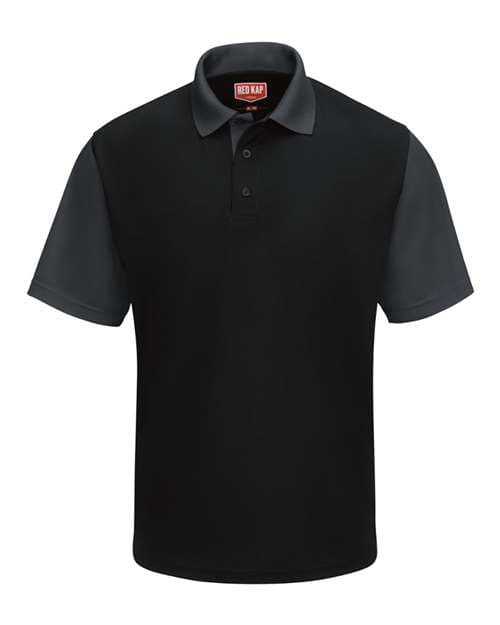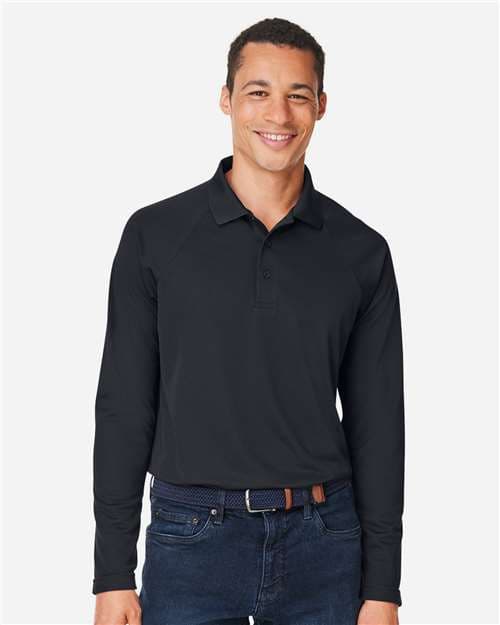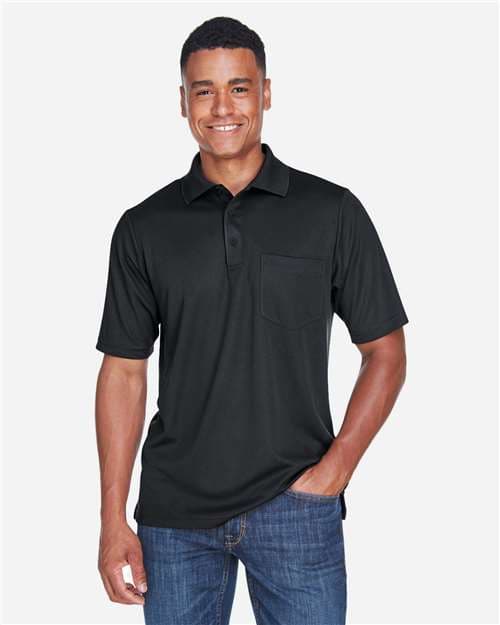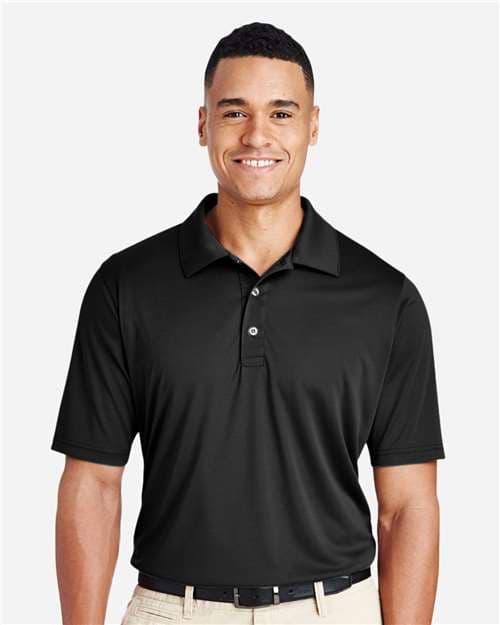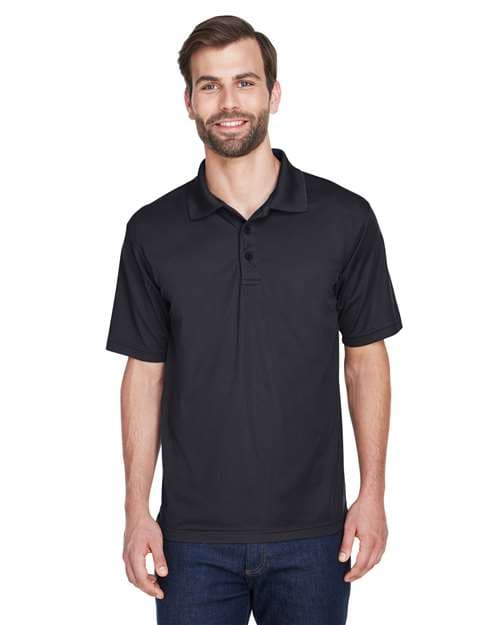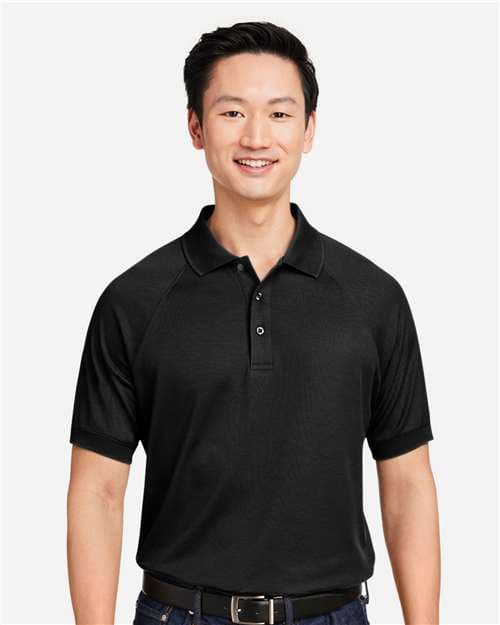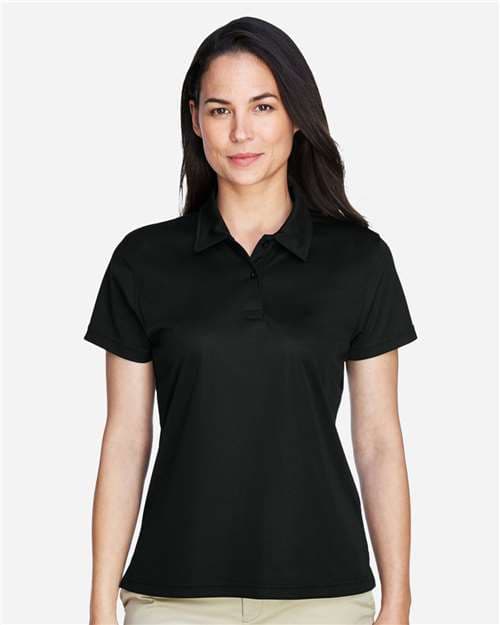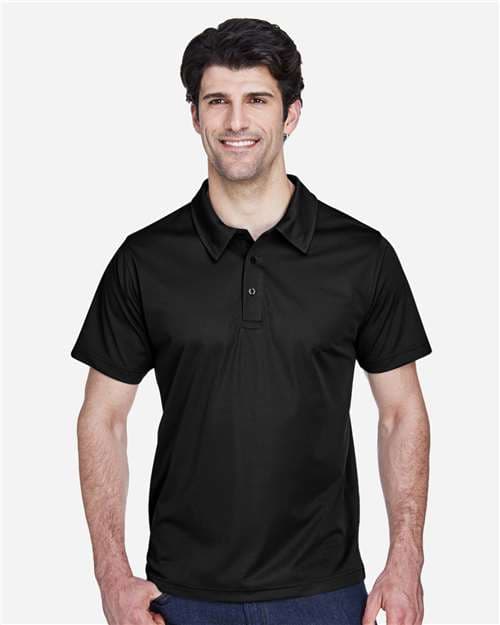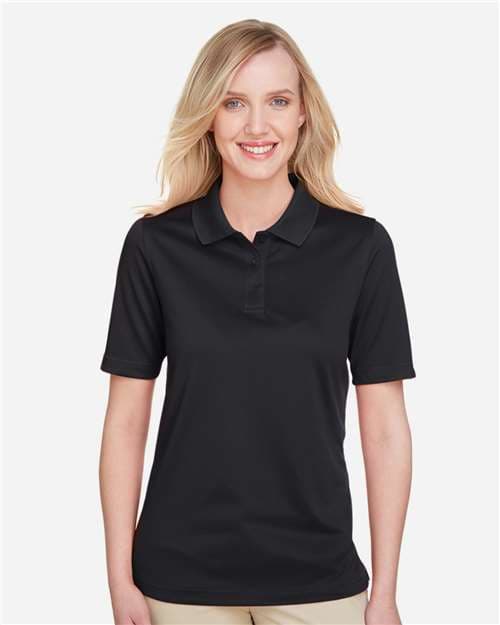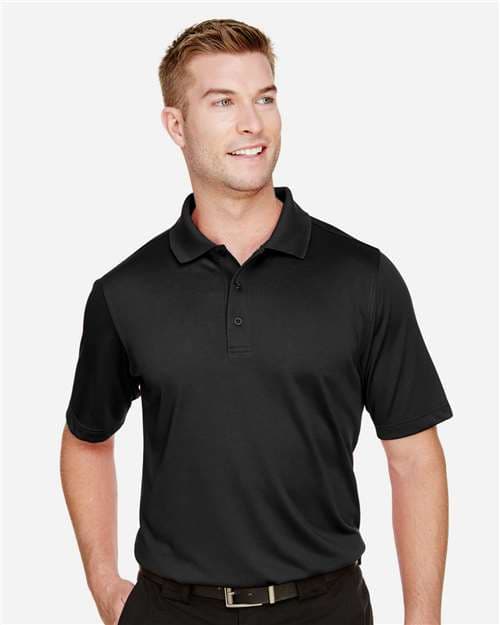

No minimum. Pick a blend that survives weekly commercial washing.
What makes a polo work well as a uniform
Most polo shirts are built for casual wear. A work uniform is different. It goes through commercial laundering every week, sometimes twice a week. The crew may wear it in an office, a hot kitchen or an outdoor site. Six months on, you need the same shirt again, close to the ones already worn.
Three things set a work polo apart. Each one has its own note below.
Blend. A 65/35 poly-cotton blend is a common pick for work programs. The polyester helps the shirt keep its shape. A 100% cotton polo can shrink in a hot wash. A poly-cotton blend usually shrinks less. Cotton is still in the blend for breathability and hand feel. There is no minimum, so order one sample first. Wash it the way you will wash the crew's, within its care label.
Collar construction. A flat-knit collar tends to hold its shape through commercial washing. A self-fabric collar, cut from the body's pique, is softer on day one. It can curl at the edges with repeated industrial washing. On a customer-facing crew, the curl shows.
Embroidery backing. Embroidery on a pique knit needs a stabilizer backing under the fabric. Without it, the raised mesh can distort and the logo can pucker. The backing keeps the stitches from pulling the knit. With it and the right stitch density, the logo holds up through repeated washing.
Reordering without surprises
The most expensive part of a uniform program is not the initial order. It is the reorder. A new hire comes on, someone changes sizes, or a shirt wears out.
Two things cause reorder problems: color drift and size gaps.
Color drift happens when the same style number ships from a different dye lot. Polyester fibers are dye-lot consistent within a production run. A supplier may change yarn stock between seasons. Then the same style and colorway can arrive slightly different. It shows under fluorescent light and less in direct sun. Order the same style number and color from one source each time. That keeps the crew as close as the mill allows.
Size gaps happen when the initial program is ordered without enough size range. A crew often has a few people who need 2XL or 3XL. Cut the first order at XL and the fix is a small reorder. A small order pays a higher price per shirt. A size survey before launch heads that off.
Write the program down on the first order
A reorder is quick when the first order left a record. Write down five things: style number, color, size breakdown, logo file and stitch count. Keep those five together. The next order is then a quantity and a size run, not a fresh start.
What to send with the first order:
- Logo file. Vector preferred (.ai, .eps, .svg). Rasterized works if it is clean.
- Style and color. The work shelf below is sorted for trade crews.
- Size breakdown across the team, including anyone who needs extended sizes.
- Decorated or undecorated for the first shipment. Many programs decorate from the start.
Snag protection earns its place on a trade crew
A trade crew's polo has to do more than look neat. HVAC, plumbing, electrical, landscaping and auto shop crews work around brackets, branches and engine bays. Plain pique can catch and snag on them.
So the work polos shelf leans on features you can check. Harriton Advantage and Team 365 Command both have snag protection, in men's and women's cuts. For grease and dirt, Harriton's Charge adds soil protect to the snag protection. It comes in long sleeve too. Harriton Advantage, Red Kap and UltraClub mesh go up to 6XL. CORE365 makes a pocket version for a pen.
Crews on a job site all day have their own shelf. The construction polos carry chest pockets and gripper fronts. Kitchen and floor staff fit the restaurant polos, where stain release matters more than snags.
Outdoor crews, or anyone working somewhere hot, may prefer moisture-wicking performance polyester. It pulls sweat away and dries faster than pique. For indoor and customer-facing crews, pique keeps the classic polo look.
For office and client-facing teams: Corporate polo shirts.
For embroidery options and thread choices: Embroidered polo shirts.
By Michael Monfared, Polo Supply Co.