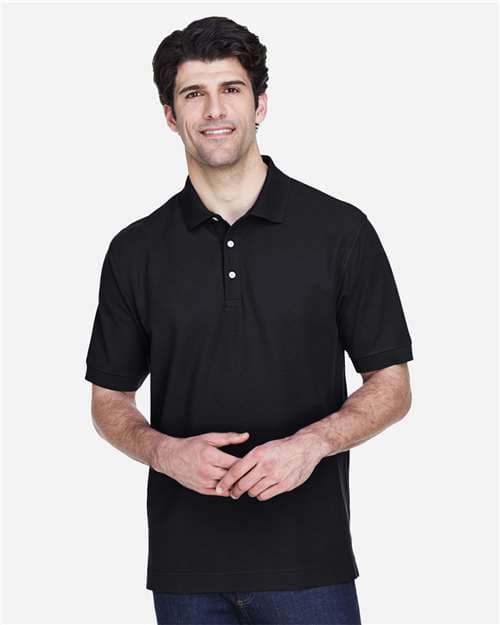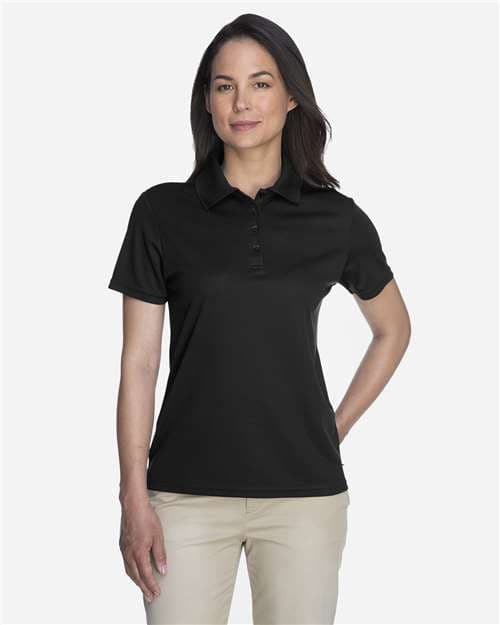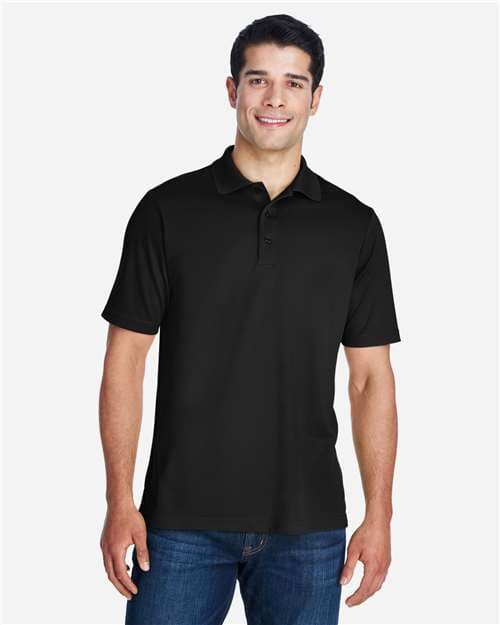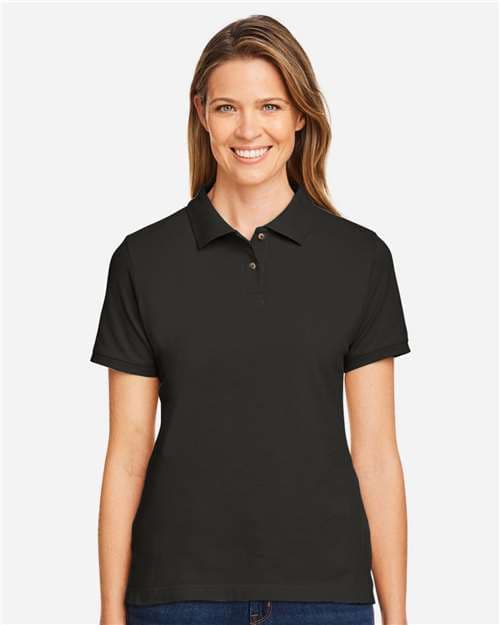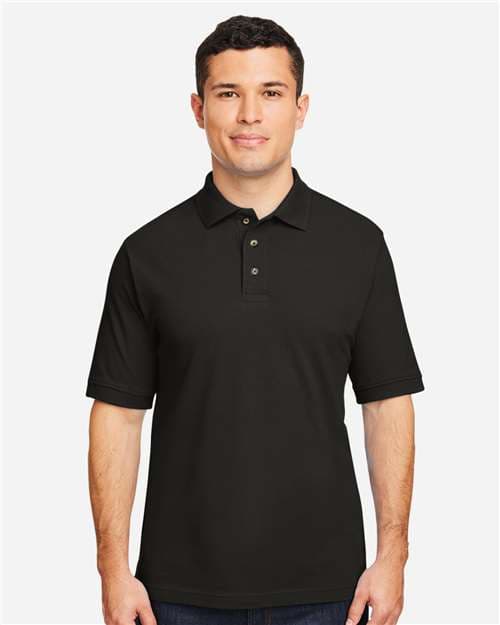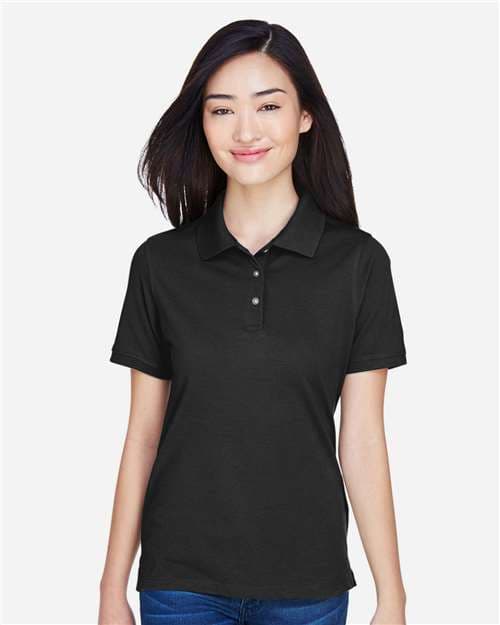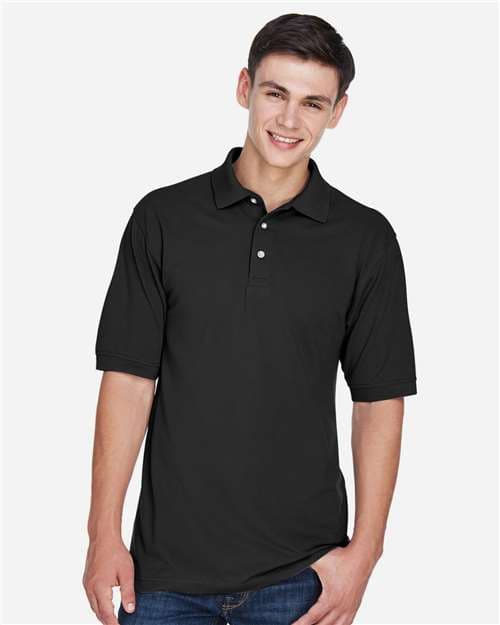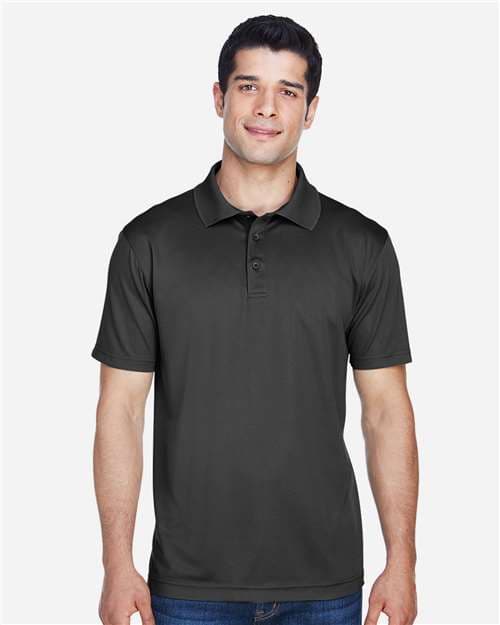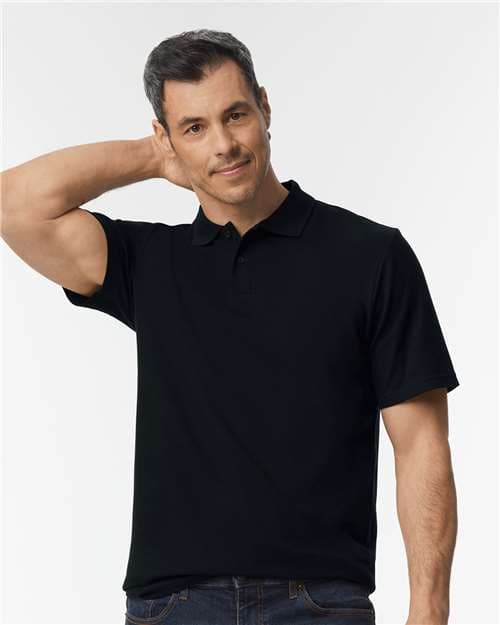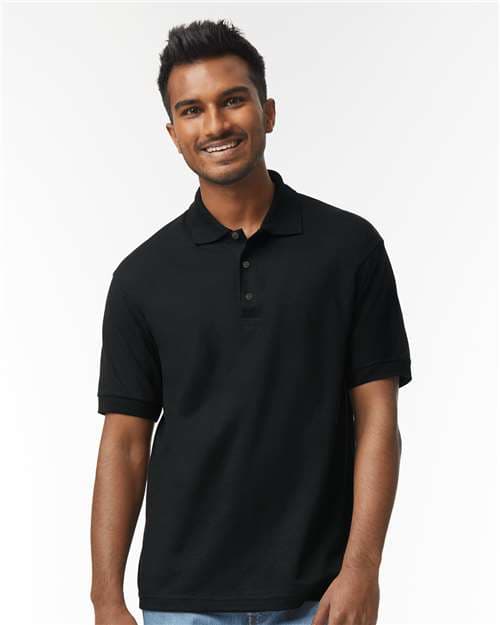
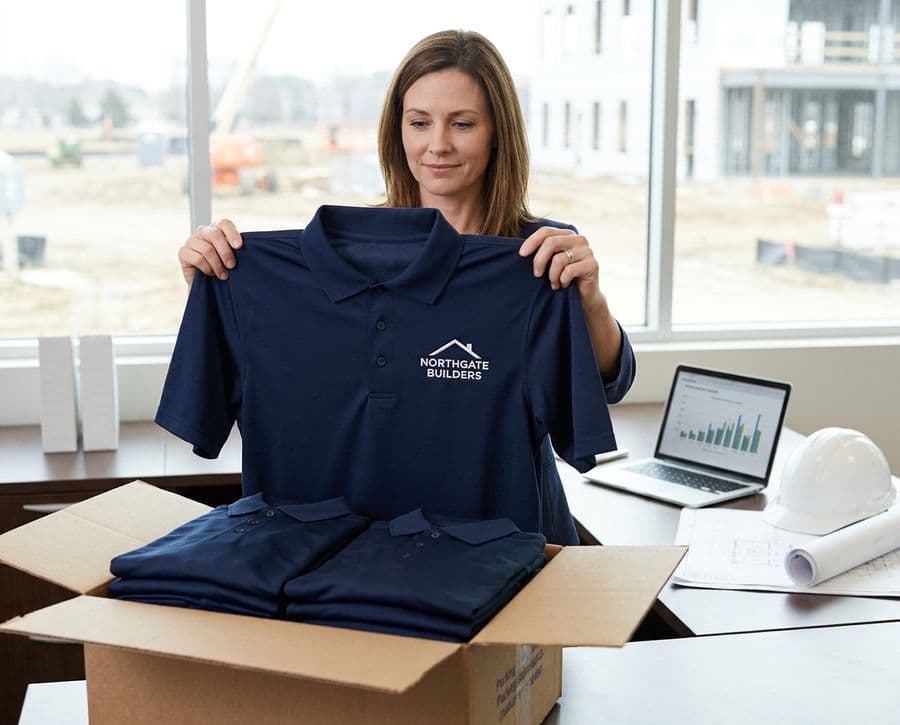
Custom polo shirts with your logo embroidered on the chest. No minimum, and every polo's page shows the price at each quantity.
Why most polo logos are embroidered
The classic polo is a pique knit, with a raised, textured surface. Some polos on our shelves are smooth jersey or fine mesh instead. On pique, the texture helps the shirt breathe. It also shapes the choice of method.
Custom embroidered polo shirts have the logo sewn into the knit. A stabilizer backing underneath supports the pique during the needle pass. Ink has to sit on top of the texture instead. Fine detail is harder to print cleanly on textured pique. So on a polo, the real question is how the logo looks on day one.
Embroidery outlasts the shirt. So does a screen print. Both survive hundreds of washes. Transfers are rated for 65+ washes, washed cold and inside out. Weekly commercial laundry is harder on them, so skip transfers for uniform programs.
Placement
Left chest is standard. It sits above an apron bib or a lanyard. It is also the first spot people read face to face.
Right chest is where the name goes. A name there is what most people mean by personalized polo shirts. The usual convention runs left for the company and right for the name. Both read at a glance.
A sleeve or the back yoke can carry a second logo. Each extra spot is its own decoration.
Picking the right polo for your crew
Pique vs. performance interlock. Pique is the classic polo look. It is textured and holds its shape. It suits an office or a front counter. Performance interlock is a moisture-wicking polyester knit. It is smoother, and it dries fast. Pick by where your crew works. Indoors at a desk or counter: pique. Outdoors or in the heat: performance interlock.
Fit. Many unisex polos are cut on a men's pattern. On a woman's frame, one can run wide in the shoulder. It can also sit boxy through the chest. For a mixed crew, order the women's cut beside the men's.
Placket length. A 2 or 3 button placket suits most programs. A 4-button placket opens wider at the neck. That helps a crew doing hot, physical work.
Start from the shelf built for your crew
The custom polos shelf is the everyday range. Harriton's M200 and CORE365's Origin pique go from XS to 6XL. Each has a women's cut beside it. Devon & Jones D100 is the pima option. If your people do one job all day, their own shelf is the shorter path:
- Kitchens, bars and hotel desks: restaurant polos, with stain release and snag protect knits.
- Job sites: construction polos, with chest pockets and gripper fronts.
- Gyms and trainers: athletic polos.
- The sideline: coaches polos, plus team polos in youth sizes for the players.
- Guard posts and event gates: security and event staff polos.
- Client and executive gifts: corporate gift polos from vineyard vines, Fairway & Greene and Swannies.
The price drops as the order grows
One polo is priced at retail, like a polo off a store rack. The price per shirt steps down at each quantity break after that. At the 12-piece break, a small team already pays less per shirt.
Every polo's page shows the price at each break. You can see where yours lands before you ask anyone.
What to send us
- Your logo file. Vector (.ai, .eps, .svg) if you have it. JPG or PNG works, but vector holds small detail better on fabric.
- Quantity and size breakdown across your crew.
- Placement: left chest, right name drop, both, or somewhere else.
- Fabric preference if you have one: standard pique or moisture-wicking.
No minimum. A single shirt costs more per piece than a crew order does. The setup is spread over fewer shirts.
For a deeper look at embroidery options: Embroidered polo shirts.
For custom polo shirts for business, with a reorder to plan for: Corporate polo shirts.
By Michael Monfared, Polo Supply Co.